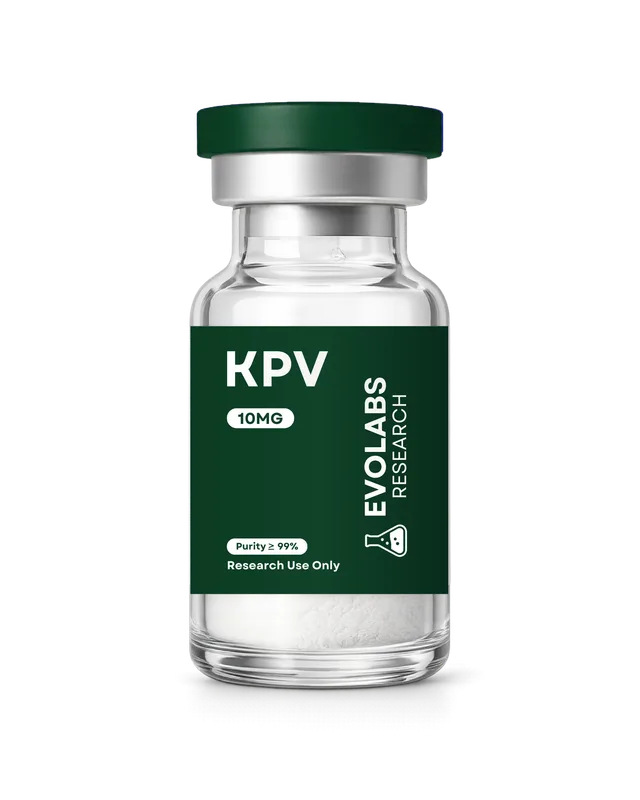
KPV
A C-terminal tripeptide of alpha-MSH with potent anti-inflammatory properties. KPV is studied for gut inflammation, wound healing, and systemic anti-inflammatory effects.
Compound Profile
Pharmaceutical Data Sheet
Mechanism of Action
How KPV Works
KPV is the C-terminal tripeptide of alpha-melanocyte stimulating hormone (Ξ±-MSH), retaining its anti-inflammatory activity with a more compact molecular structure. It acts primarily via MC-1R and MC-3R on immune cells and colonic epithelium, suppressing NF-ΞΊB activation, reducing pro-inflammatory cytokine production, and promoting mucosal healing in the gastrointestinal tract.
- MC-1R expressed on macrophages, dendritic cells, keratinocytes
- MC-3R on intestinal epithelial cells and neurons
- cAMP/PKA activation from Gs-coupled receptor
- Expressed in gut mucosa β enables oral/rectal delivery research
- PKA phosphorylation of IKKΞ² prevents NF-ΞΊB activation
- Reduces TNF-Ξ±, IL-1Ξ², IL-6, and IL-8 production
- Attenuates NLRP3 inflammasome assembly
- Decreases ICAM-1 and adhesion molecule expression
- Upregulates claudin-1, occludin, and ZO-1 expression
- Restores tight junction integrity after inflammatory damage
- Reduces intestinal permeability ("leaky gut")
- Promotes epithelial restitution after ulceration
KPV binds melanocortin receptors (MC-1R, MC-3R) on macrophages and intestinal epithelial cells, activating Gs-cAMP-PKA signaling. PKA phosphorylates and inactivates IKK, preventing NF-ΞΊB activation and transcription of TNF-Ξ±, IL-1Ξ², and IL-6. Additionally, KPV directly suppresses NLRP3 inflammasome assembly, reducing IL-18 and IL-1Ξ² maturation.
Dalmasso G et al., J Clin Invest (2008): KPV downregulates intestinal inflammation via melanocortin receptors.
Preclinical Findings
Research Models
Clinical Data
Preclinical Efficacy in IBD Models β Human Data Emerging
KPV has demonstrated robust anti-inflammatory effects in multiple rodent IBD models (DSS, TNBS colitis) and in human intestinal organoid cultures. Early-phase human studies exploring oral nanoparticle delivery are in development.
Dalmasso G et al., J Clin Invest (2008); Laroui H et al., J Control Release (2010): Nanoparticle-delivered KPV in colitis.
Preclinical rodent IBD models; human organoid studies
Research Outcomes
Key Research Success Metrics
Safety Profile
Research Safety Notes
- Small endogenous tripeptide β expected to have favorable inherent safety profile
- Derived from Ξ±-MSH, which has extensive safety data in human studies
- No significant adverse effects in preclinical toxicology
- Potential pigmentation changes at high doses via MC-1R in melanocytes
- Human clinical data limited β drug delivery strategy (nanoparticle) adds complexity
KPV is primarily a preclinical research compound. Human clinical data is limited. For research use only.
About KPV
A C-terminal tripeptide of alpha-MSH with potent anti-inflammatory properties. KPV is studied for gut inflammation, wound healing, and systemic anti-inflammatory effects.
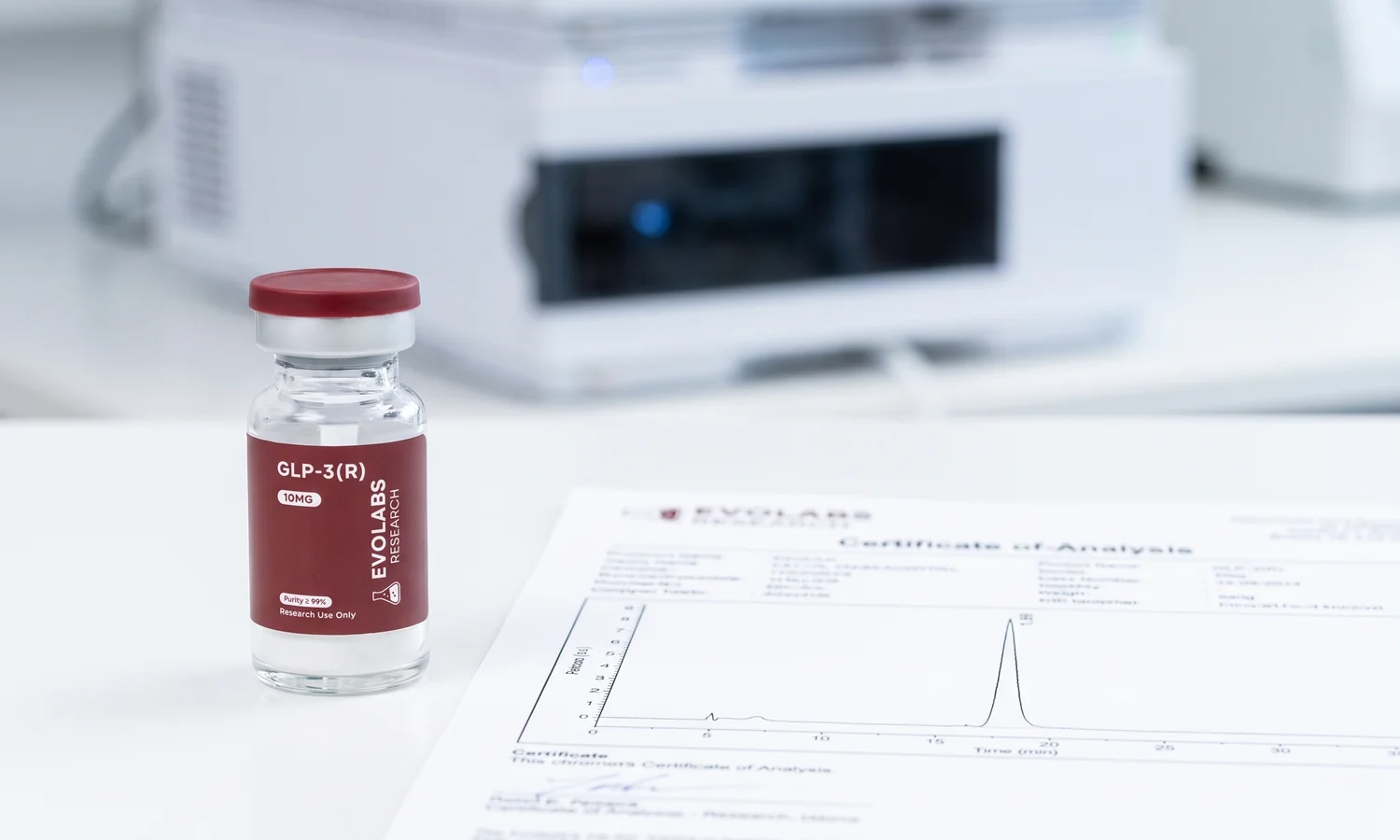
All EVO Labs Research compounds are manufactured to research-grade standards and independently tested by Janoshik Analytical (Prague, est. 2013). The Certificate of Analysis for this compound includes full HPLC chromatography data, mass spectrometry confirmation, net purity percentage, and net content verification.
Research Use Only
This product is strictly for in vitro research and laboratory use only. Not for human or veterinary consumption. By purchasing, you confirm use in a controlled research setting.