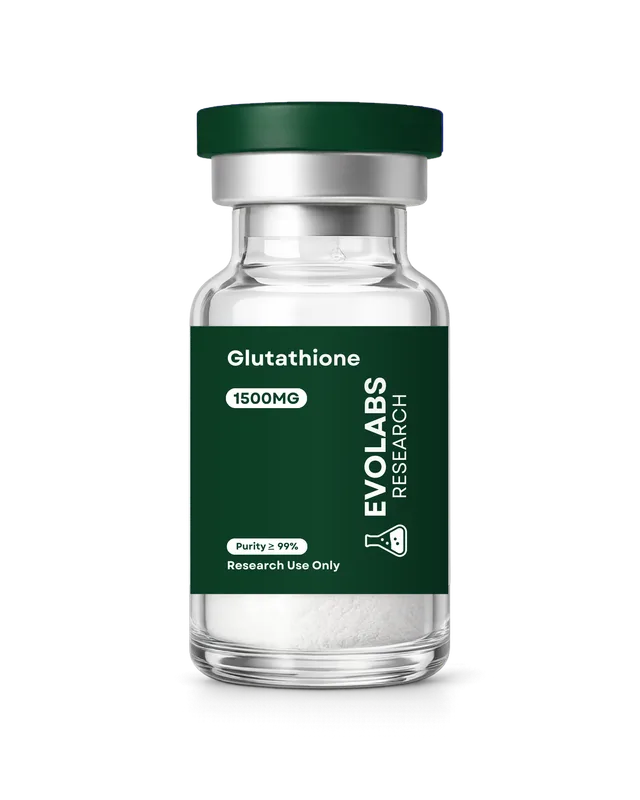
Glutathione
The body's master antioxidant tripeptide. Glutathione is critical for cellular detoxification, immune function, and mitochondrial protection research.
Compound Profile
Pharmaceutical Data Sheet
Mechanism of Action
How Glutathione Works
Glutathione (GSH) is the most abundant endogenous antioxidant, maintaining cellular redox homeostasis through its thiol group. It directly neutralizes reactive oxygen species (ROS), regenerates vitamins C and E, and serves as an essential cofactor for glutathione peroxidase (GPx) enzymes. GSH also conjugates electrophilic compounds in Phase II hepatic detoxification and regulates immune function through thiol-disulfide exchange.
- Directly neutralizes HβOβ and superoxide
- GPx uses GSH to detoxify lipid hydroperoxides
- Regenerates oxidized ascorbate (Vitamin C)
- Recycles tocopheryl radical back to Vitamin E
- Glutathione S-transferases conjugate GSH to toxins
- Enables renal/biliary excretion of electrophilic compounds
- Critical for acetaminophen, heavy metal, and carcinogen clearance
- GSH depletion is primary mechanism of acetaminophen hepatotoxicity
- Mitochondrial GSH pool is maintained independently
- Protects respiratory chain complexes from oxidative inactivation
- Prevents cytochrome c release and apoptosis initiation
- Depletion of mitochondrial GSH is early marker of cell death
GSH donates an electron to neutralize ROS (HβOβ, lipid peroxides), becoming oxidized glutathione (GSSG). Glutathione reductase then regenerates GSH using NADPH. The GSH/GSSG ratio serves as the primary cellular redox sensor β a low ratio indicates oxidative stress. Glutathione peroxidase (GPx) uses GSH to catalytically neutralize HβOβ and lipid hydroperoxides.
Forman HJ et al., Free Radic Biol Med (2009): Glutathione: overview of its protective roles and metabolism.
Preclinical Findings
Research Models
Clinical Data
IV Glutathione Reduces Oxidative Stress Biomarkers
IV glutathione supplementation studies in Parkinson's disease patients, diabetics, and aging populations demonstrate significant reductions in oxidative stress biomarkers (8-OHdG, MDA, protein carbonyls) and improvements in inflammatory markers, though oral bioavailability remains a challenge.
Sinha R et al., Eur J Nutr (2018): Oral supplementation with liposomal glutathione elevates body stores.
Multiple human supplementation trials
Research Outcomes
Key Research Success Metrics
Safety Profile
Research Safety Notes
- Extremely safe β endogenous molecule present in all cells at millimolar concentrations
- IV administration well-tolerated in multiple human clinical studies
- No significant adverse effects reported at studied doses
- Rare: mild flushing, transient zinc depletion with very high-dose protocols
- No mutagenic, carcinogenic, or teratogenic signals in any preclinical or clinical data
Glutathione has limited oral bioavailability; injectable research protocols are most relevant. For research use only.
About Glutathione
The body's master antioxidant tripeptide. Glutathione is critical for cellular detoxification, immune function, and mitochondrial protection research.
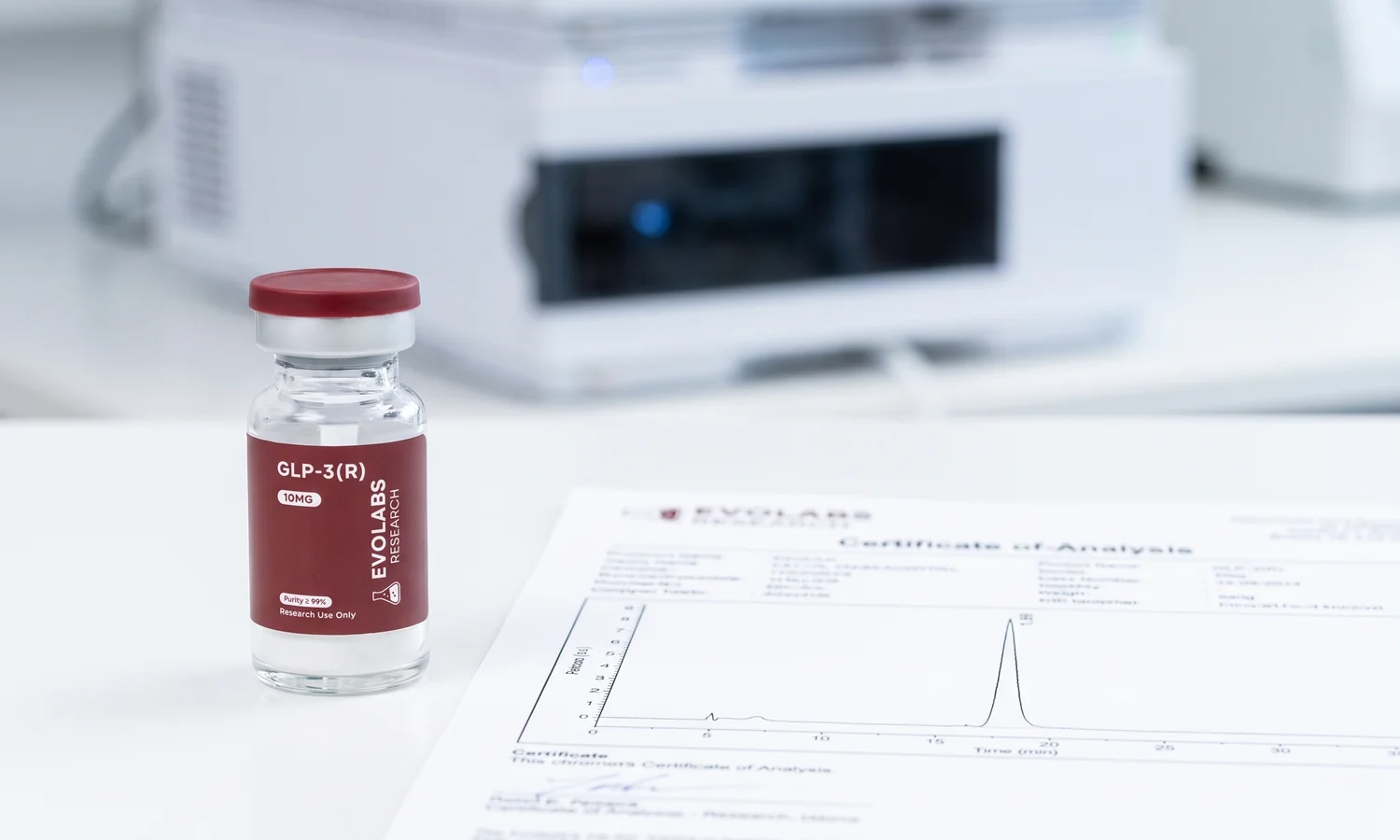
All EVO Labs Research compounds are manufactured to research-grade standards and independently tested by Janoshik Analytical (Prague, est. 2013). The Certificate of Analysis for this compound includes full HPLC chromatography data, mass spectrometry confirmation, net purity percentage, and net content verification.
Research Use Only
This product is strictly for in vitro research and laboratory use only. Not for human or veterinary consumption. By purchasing, you confirm use in a controlled research setting.