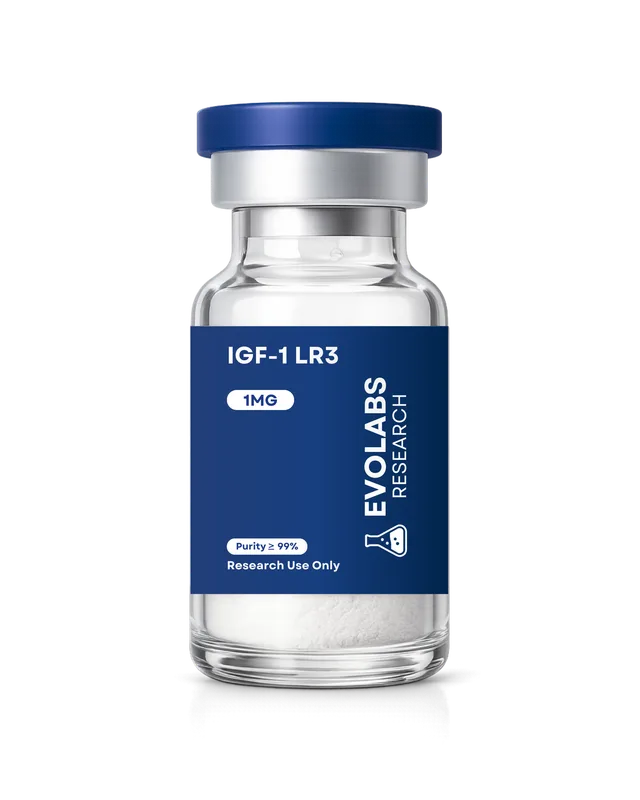
IGF-1LR3
Long-arg3 IGF-1 variant with extended half-life. Insulin-like Growth Factor 1 LR3 is researched for its potent anabolic effects and role in muscle and connective tissue repair.
Compound Profile
Pharmaceutical Data Sheet
Mechanism of Action
How IGF-1LR3 Works
IGF-1 LR3 is a recombinant analog of IGF-1 with a 13-amino acid N-terminal extension and an Arg3 substitution that reduces IGFBP-3 binding by >300-fold, extending plasma half-life from ~10 minutes (native IGF-1) to ~20 hours. It binds IGF-1R with full potency, activating the most potent anabolic intracellular cascade in mammalian biology.
- Akt phosphorylates TSC2, releasing mTORC1
- mTORC1 activates S6K1 for ribosomal biogenesis
- 4E-BP1 phosphorylation enables cap-dependent translation
- Net effect: increased protein synthesis in myocytes and fibroblasts
- Akt phosphorylates and inactivates FoxO1/FoxO3a
- Prevents MuRF-1 and atrogin-1 ubiquitin ligase expression
- Suppresses autophagy-mediated muscle protein degradation
- Critical for muscle preservation in catabolic states
- PI3K pathway drives protein synthesis and anti-apoptosis
- MAPK/ERK pathway drives cell proliferation
- Dual pathway activation in satellite cells for muscle repair
- Fibroblast and chondrocyte proliferation for connective tissue repair
IGF-1 LR3 binds IGF-1R, triggering receptor autophosphorylation and IRS-1 recruitment. IRS-1 activates PI3K, which generates PIP3 to recruit and activate Akt. Akt then phosphorylates TSC2 to release mTORC1 inhibition, activating S6K1 and 4E-BP1 for protein synthesis. Akt simultaneously phosphorylates and inactivates FoxO1/3 to prevent muscle atrophy gene expression.
Jones JI & Clemmons DR, Endocr Rev (1995): Insulin-like growth factors and their binding proteins: biological actions.
Preclinical Findings
Research Models
Clinical Data
Superior Anabolic Potency vs. Native IGF-1
Head-to-head pharmacological studies demonstrate that IGF-1 LR3 produces 2β3Γ greater anabolic effects than equimolar native IGF-1 in tissue culture and preclinical models, attributable to its extended half-life and reduced IGFBP binding preventing clearance from target tissues.
Francis GL et al., Eur J Biochem (1992): IGF-1 analogs with reduced binding protein affinity.
In vitro and rodent pharmacological comparison studies
Research Outcomes
Key Research Success Metrics
Safety Profile
Research Safety Notes
- Insulin-like hypoglycemia risk at doses exceeding normal physiological range
- Monitor blood glucose with any exogenous IGF-1 analog
- Mitogenic effects β contraindicated where active tumor growth is a concern
- Joint pain and soft tissue edema reported at high doses in clinical IGF-1 programs
- Extended half-life increases duration of hypoglycemic risk vs. native IGF-1
IGF-1 LR3 is a potent growth factor analog. Hypoglycemia risk is a key safety consideration. For research use only.
About IGF-1LR3
Long-arg3 IGF-1 variant with extended half-life. Insulin-like Growth Factor 1 LR3 is researched for its potent anabolic effects and role in muscle and connective tissue repair.
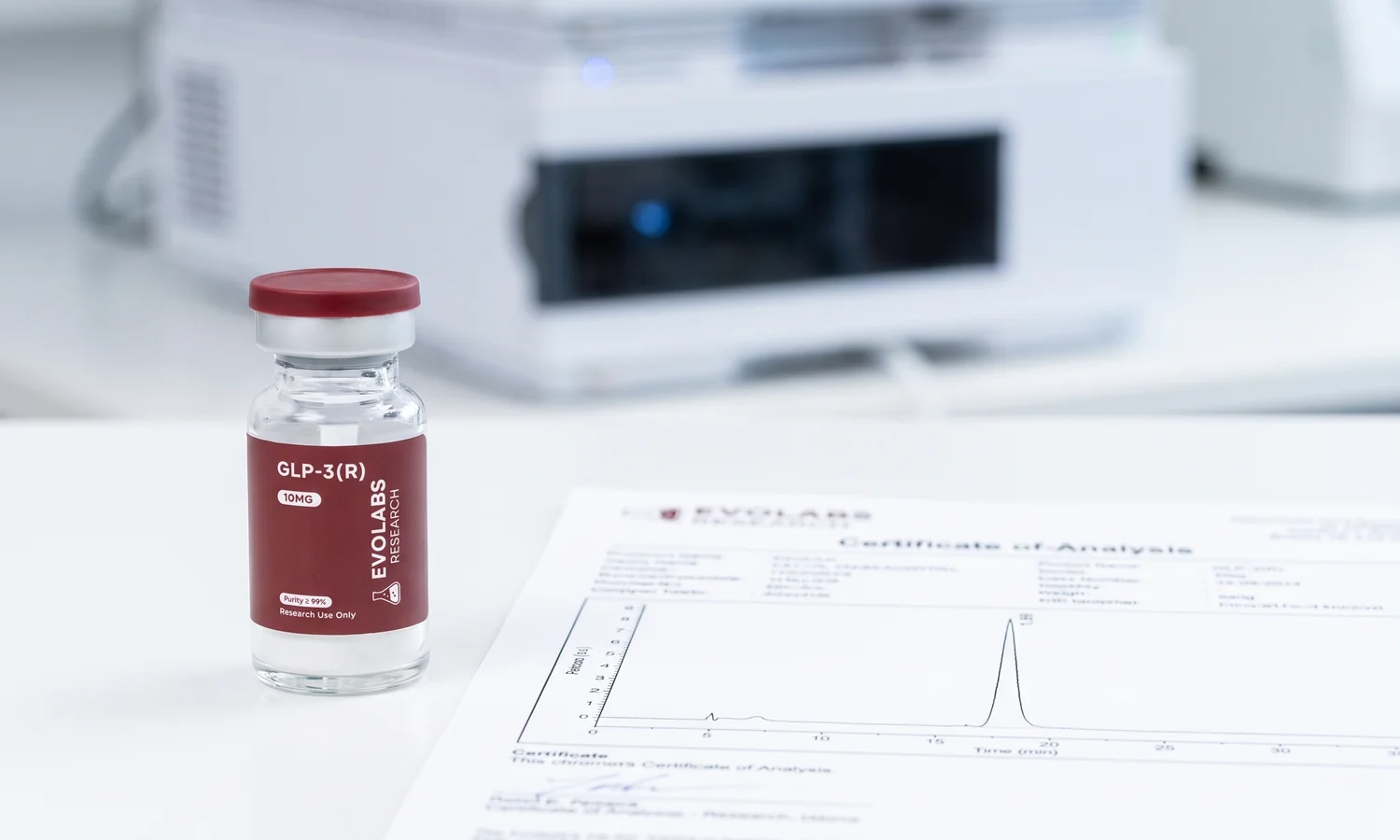
All EVO Labs Research compounds are manufactured to research-grade standards and independently tested by Janoshik Analytical (Prague, est. 2013). The Certificate of Analysis for this compound includes full HPLC chromatography data, mass spectrometry confirmation, net purity percentage, and net content verification.
Research Use Only
This product is strictly for in vitro research and laboratory use only. Not for human or veterinary consumption. By purchasing, you confirm use in a controlled research setting.