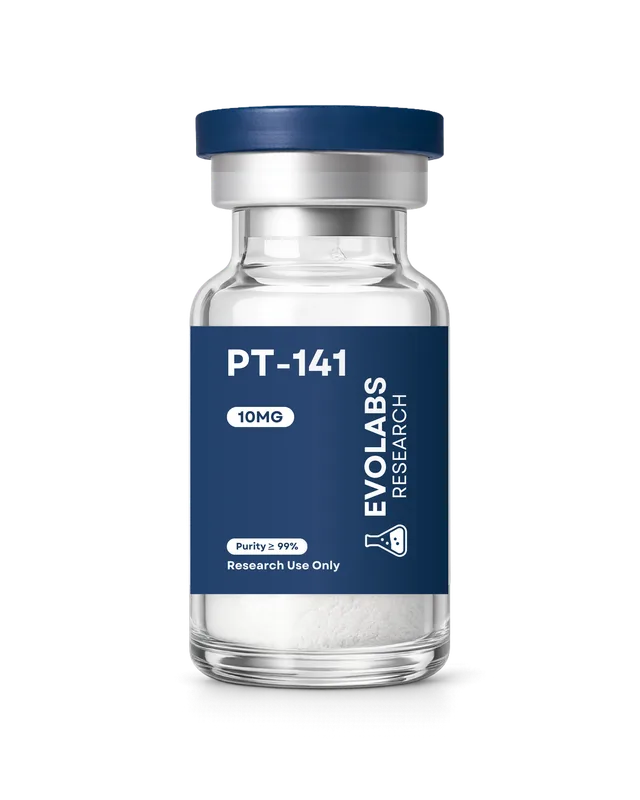
PT-141
Bremelanotide — a melanocortin receptor agonist. PT-141 acts on the central nervous system and is studied for its effects on sexual function and melanocortin signaling pathways.
Compound Profile
Pharmaceutical Data Sheet
Mechanism of Action
How PT-141 Works
Bremelanotide (PT-141) is a synthetic cyclic heptapeptide analog of alpha-MSH that activates MC3R and MC4R in the central nervous system. Unlike PDE5 inhibitors that act peripherally, PT-141 is the first centrally-acting FDA-approved treatment for hypoactive sexual desire disorder, working through hypothalamic and limbic top-down CNS signaling to increase sexual desire and arousal.
- Hypothalamic MC4R activation triggers arousal cascade
- Oxytocin and dopamine release in limbic circuits
- Descending spinal signaling facilitates genital response
- Modulates energy and motivational circuits
- Contributes to reward-pathway sensitization
- Broader melanocortin system engagement
- Oxytocin release enhances arousal and pair-bonding
- Dopamine release in mesolimbic reward pathway
- Transient BP increase (~4–6 mmHg, normalizes by 8–10 hrs)
PT-141 activates MC4R in the medial preoptic area and paraventricular nucleus, triggering oxytocin and dopamine release that facilitate sexual arousal via descending spinal pathways. This CNS mechanism produces desire and arousal independent of peripheral vascular effects. The 1.75 mg SC dose was selected from Phase 2b optimization (n=397).
Kingsberg SA et al., Obstet Gynecol (2019): RECONNECT Phase 3 trials; Clayton AH et al., J Sex Med (2016): Phase 2b.
Preclinical Findings
Research Models
Clinical Data
RECONNECT Phase 3: Significant Improvement in Desire & Distress
Two identically designed Phase 3 RECONNECT trials (n=1,247 premenopausal women with HSDD) met both coprimary endpoints: statistically significant improvement in sexual desire (effect size 0.49–0.61) and reduction in associated distress (effect size 0.60–0.62). A 52-week safety extension showed no new concerns. Nausea (40%) was the most common AE.
Kingsberg SA et al., Obstet Gynecol (2019); Clayton AH et al., J Sex Med (2016); 52-week safety extension.
Phase 3 RCTs (RECONNECT-1 & -2), n=1,247; Phase 2b n=397; 52-week extension
Research Outcomes
Key Research Success Metrics
Safety Profile
Research Safety Notes
- Nausea is the most common side effect (40.0%), generally mild and self-limiting
- Flushing (20.3%), injection site reactions (13.2%), headache (11.3%) reported in trials
- Small, transient BP increases peak at 4 hrs and normalize by 8–10 hrs — no cumulative effects
- Contraindicated in uncontrolled hypertension or cardiovascular disease
- No new safety concerns in 52-week long-term extension study
PT-141 (bremelanotide) is FDA-approved as Vyleesi for HSDD. Effect sizes, while statistically significant, reflect modest absolute improvements. Research-grade compound for laboratory use only.
About PT-141
Bremelanotide — a melanocortin receptor agonist. PT-141 acts on the central nervous system and is studied for its effects on sexual function and melanocortin signaling pathways.
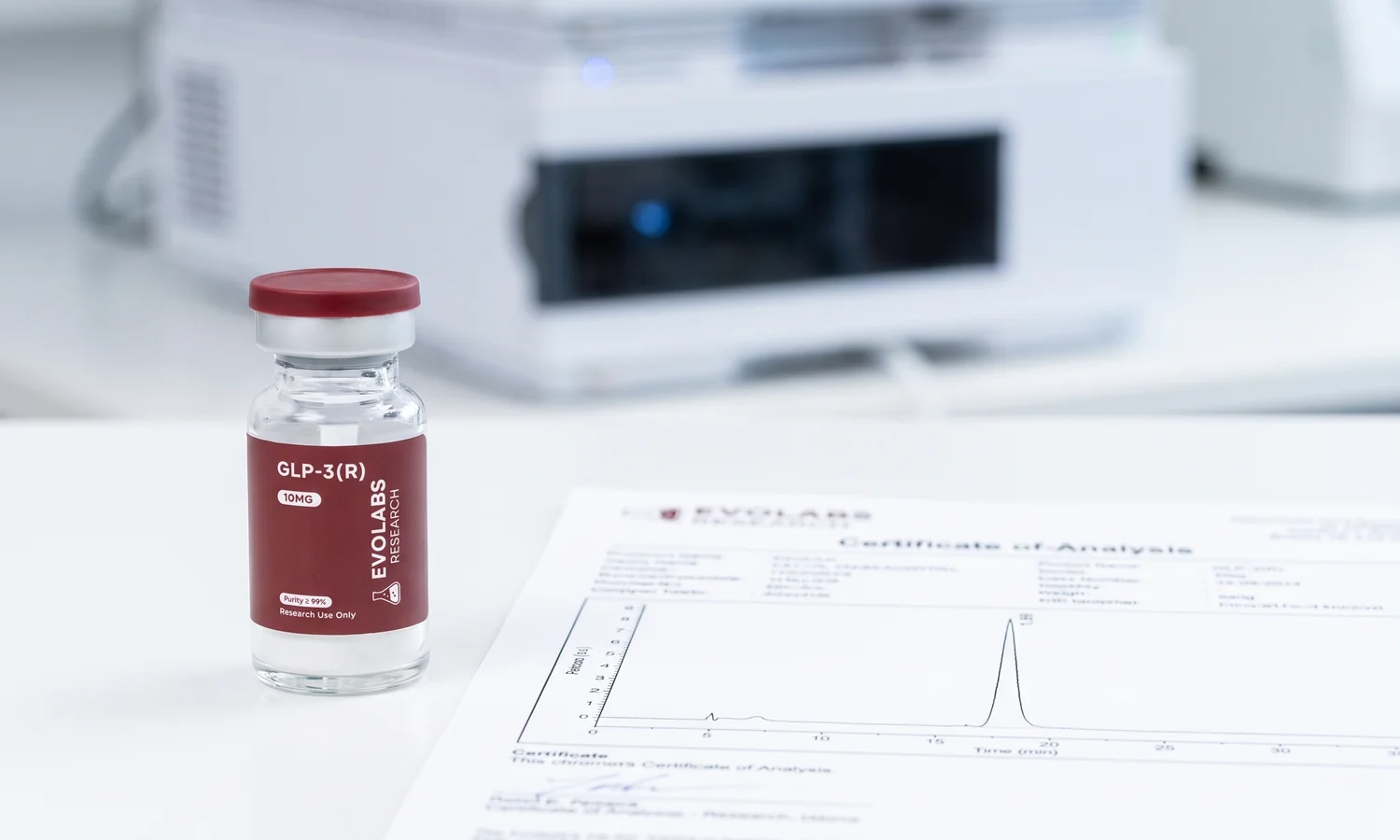
All EVO Labs Research compounds are manufactured to research-grade standards and independently tested by Janoshik Analytical (Prague, est. 2013). The Certificate of Analysis for this compound includes full HPLC chromatography data, mass spectrometry confirmation, net purity percentage, and net content verification.
Research Use Only
This product is strictly for in vitro research and laboratory use only. Not for human or veterinary consumption. By purchasing, you confirm use in a controlled research setting.