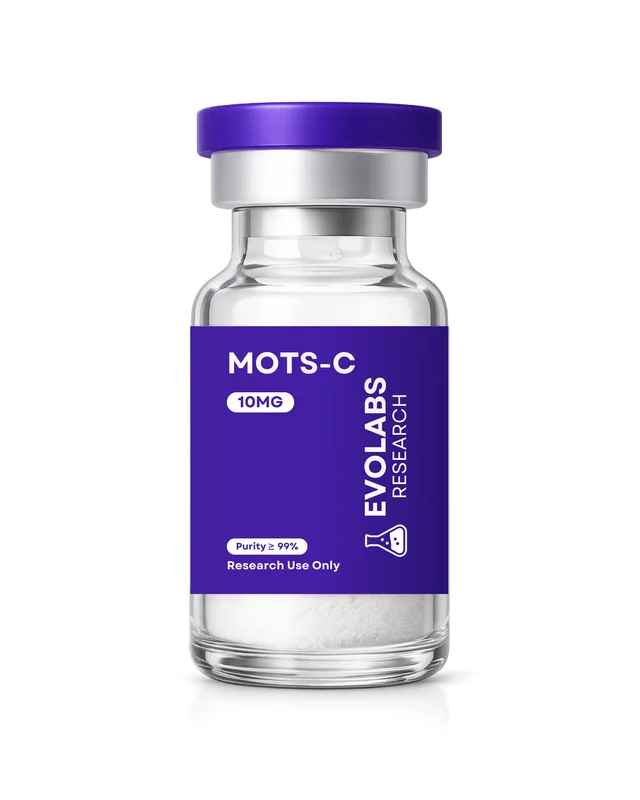
MOTS-C
A mitochondria-derived peptide (MDP) encoded within the mitochondrial 12S rRNA gene. Studied for its role in metabolic regulation, exercise performance, and longevity.
Compound Profile
Pharmaceutical Data Sheet
Mechanism of Action
How MOTS-C Works
MOTS-C is a 16-amino acid peptide encoded in the mitochondrial genome β one of the few mitochondria-derived peptides (MDPs) identified to date. Under metabolic stress, MOTS-C translocates from mitochondria to the nucleus where it activates AMPK and regulates metabolic gene expression. It acts as an endogenous exercise mimetic, improving insulin sensitivity and metabolic flexibility.
- Activates AMPK by increasing AMP:ATP ratio sensing
- Drives GLUT4 translocation for glucose uptake
- Inhibits mTORC1 to shift toward catabolism
- Promotes fatty acid oxidation via ACC inhibition
- Activates Nrf2/ARE pathway in nucleus
- Upregulates antioxidant enzymes (HO-1, NQO1)
- Protects mitochondria from oxidative damage
- Reduces ROS-induced mitochondrial dysfunction
- Promotes GLUT4 surface expression in muscle
- Improves insulin-stimulated glucose uptake
- Reduces HbA1c in type 2 diabetes models
- Acts synergistically with exercise for insulin sensitivity
Metabolic stress triggers mitochondrial translation of MOTS-C, which is then secreted and translocates to the nucleus. In the nucleus, MOTS-C activates AMPK and regulates Antioxidant Response Elements (ARE), driving expression of metabolic flexibility genes. This mechanism allows mitochondria to directly signal the nucleus in response to energetic demand.
Lee C et al., Cell Metab (2015): MOTS-C is a mitochondrial-derived peptide regulating metabolic homeostasis.
Preclinical Findings
Research Models
Clinical Data
Circulating MOTS-C Correlates with Physical Fitness
Human studies show that circulating MOTS-C levels are significantly higher in physically active individuals and elite athletes, and decline with age. Higher MOTS-C correlates with lower fasting glucose, better insulin sensitivity, and improved metabolic biomarkers.
Kim KH et al., Nat Commun (2022): Physical exercise elevates MOTS-C in human circulation.
Human observational cohort study
Research Outcomes
Key Research Success Metrics
Safety Profile
Research Safety Notes
- MOTS-C is an endogenous mitochondria-derived peptide β high endogenous safety expectation
- No serious adverse events reported in early human observational work
- Preclinical studies show no organ toxicity at studied doses
- No hormonal suppression or receptor desensitization observed
- Human pharmacokinetic and dose-finding studies are ongoing
MOTS-C is an endogenous peptide with limited clinical trial data. Most evidence is preclinical. For research use only.
About MOTS-C
A mitochondria-derived peptide (MDP) encoded within the mitochondrial 12S rRNA gene. Studied for its role in metabolic regulation, exercise performance, and longevity.
All EVO Labs Research compounds are manufactured to research-grade standards and independently tested by Janoshik Analytical (Prague, est. 2013). The Certificate of Analysis for this compound includes full HPLC chromatography data, mass spectrometry confirmation, net purity percentage, and net content verification.
Research Use Only
This product is strictly for in vitro research and laboratory use only. Not for human or veterinary consumption. By purchasing, you confirm use in a controlled research setting.


 10MG.png)